Teaching
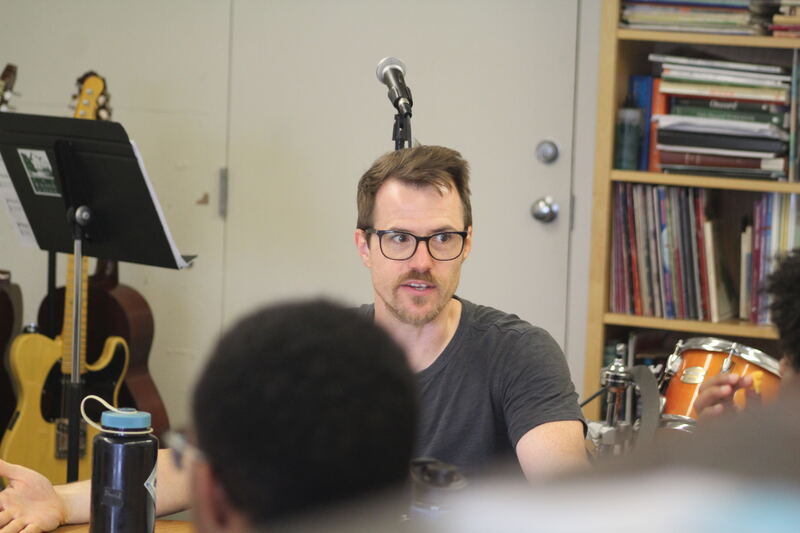
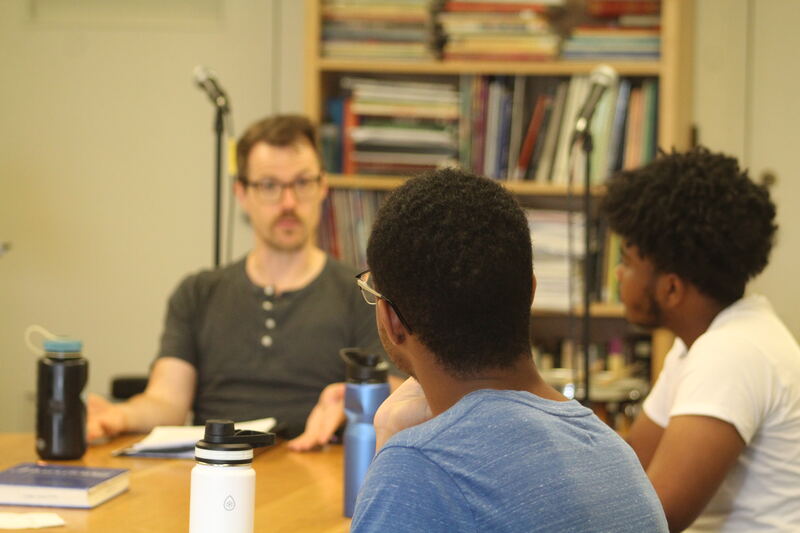
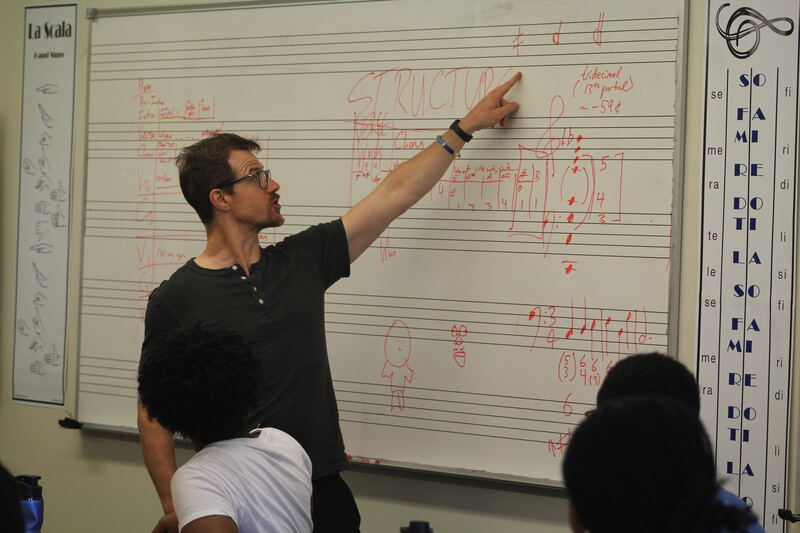
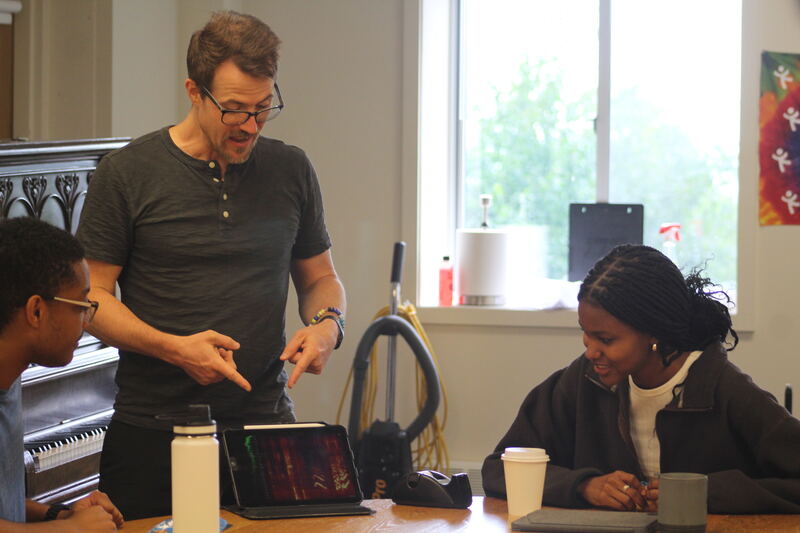
private lessons
I teach composition, music theory, guitar, and general musicianship to students of all ages and levels, from curious beginners to conservatory-bound teenagers to adults returning to music after years away.
What a first lesson looks like depends on you. For younger students, we'll play, listen, and explore — I want to find out what excites you before we build a plan. For adults, we'll talk about where you are, where you want to go, and what's been getting in the way. I've taught thousands of private lessons over fifteen years, and the thing I keep learning is that no two students need the same path.
I'm especially experienced with students who think a little differently. If your kid is the one who asks "why?" about every rule, who gets bored with rote exercises but lights up when they understand the logic underneath, that's my wheelhouse. I come from a science background myself and landed in music sideways, so I know what it's like to need the reason before the recipe.
Lessons are available in person (Towson/Baltimore area) or remotely. I teach on a flexible scheduling basis; weekly lessons work best for most students, but I accommodate irregular schedules too.
what i teach
- Theory and ear training at any level, from "I don't read music yet" through graduate-level analysis
- Composition and songwriting — classical, experimental, rock/commercial, electronic, or something new
- Guitar for beginners through intermediate players
- General musicianship for anyone who wants to understand what they're hearing
credentials
- Doctor of Musical Arts, Peabody Institute at Johns Hopkins
- Instructor of record, undergraduate music theory, Peabody (2024–present); teaching assistant 2020–2024
- Faculty at the Walden School (composition, musicianship, rock music)
- Former music curriculum designer, International School of Texas
- Over eighteen years of private teaching
courses taught
Undergraduate Music Theory
Core undergraduate theory curriculum from fundamentals of notation and acoustics through counterpoint, modulation, and forms across styles. Rooted in conservatory tradition, expanding the canon.
Musicianship
Musicianship instruction at the undergraduate level.
Composition · Musicianship · Rock: A Practical Survey
Composition instruction, musicianship, and a course on rock music history and performance, at the Walden School Young Musicians Program in Dublin, NH.
Private Composition Lessons
One-on-one instruction for students at all levels, from early music lessons through graduate-level work. Particular interest in students working at the intersection of genres, or exploring electronics and extended techniques.
philosophy
Whether examining the fundamentals of sound, elucidating the linguistic conventions of counterpoint, or exploring the formal implications of collections of sonic materials, I delight in sowing seeds along lines of inquiry that lead to the eyes-light-up wonder of discovery. This joy emerges from an environment built on four foundational pillars: creating a safe, welcoming environment where mistakes are valued as learning opportunities; designing classroom workflows that maximize cognitive efficiency to ensure maximum engagement and retention; approaching concepts from multiple perspectives that honor diverse musical practices; and cultivating active musicianship through singing, analysis, and composition.
Learning theory requires students to take intellectual risks. Establishing that errors are not failures but necessary opportunities for collective exploration and discovery, I foster an environment for students in which singing in front of peers, proposing analytical interpretations, and composing in unfamiliar styles feel safe. Drawing on cognitive science research showing that the adolescent brain is uniquely primed for pattern recognition and adaptive learning, I design assignments where revision is not just permitted but celebrated. Building this sense of security begins when students arrive: I greet each by name when possible, conduct daily check-ins to gauge energy and readiness, and structure group work that requires collaborative problem-solving.
My lesson structure eases engagement with complex material by balancing attentional demands. With increasing recognition that today's students include many neurodivergent learners, I use animated presentations synchronized with fill-in-the-blank handouts, unifying visual, auditory, and kinesthetic engagement. This reduces cognitive load by eliminating frantic transcription while keeping hands and minds active. I invite students sequentially to demonstrate their work, normalizing thinking aloud and creating a classroom culture where we learn from each other's approaches.
I teach each concept from multiple perspectives because multidimensional understanding deepens both retention and creative application. A single harmonic structure can be understood through its functional role, its acoustic properties, its historical emergence, and its use across diverse musical styles. This applies to repertoire as well: concepts will be explored through the works of Hildegard and Unsuk Chin as readily as Mozart or Beyoncé. By presenting different angles from which to approach a problem, often with historical, acoustical, and/or psychoacoustical contexts, I allow weaker students to find their entry point while awarding stronger students richer, more nuanced comprehension.
Of course, theory divorced from sound is just abstraction. Whether it be listening to examples or singing to internalize voice-leading patterns, every class session includes musical moments. Students' daily opportunities to demonstrate their understanding foster confidence and communication skills. I make explicit connections between curricular content and my students' diverse career goals, showing performers how analysis informs interpretation, composers how historical models expand their palette, and future educators how to teach these concepts effectively.
Throughout my teaching, I approach students with empathy, tailoring strategies to individual needs while fostering an environment of inclusivity and equity. Whether serving conservatory students pursuing elite careers, liberal arts students exploring music broadly, or young composers finding their voices, I tailor my approach to meet each student where they are while maintaining progress and rigor for all.